





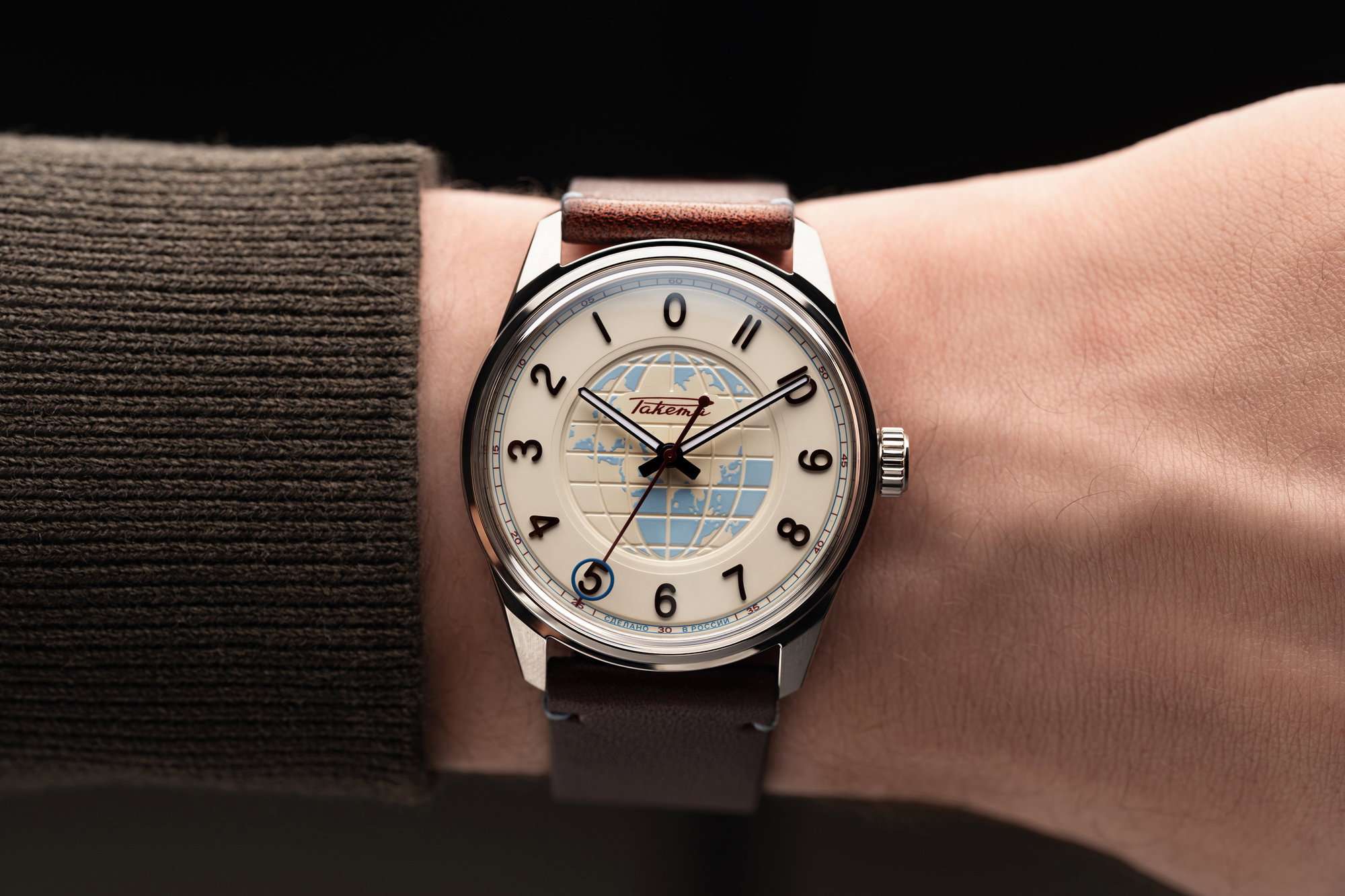





Raketa’s Russian Code Meridian begins with a question most watchmakers never think to ask: what if the conventional direction of time is wrong? Introduced at the St. Petersburg International Economic Forum on June 3, 2026, this new version of the Russian Code makes the case that counterclockwise is not a quirk but a correction. The Earth orbits the Sun counterclockwise. The Moon orbits the Earth counterclockwise. What we recognize as the normal direction of a watch hand is an artifact of sundial shadows observed in the Northern Hemisphere centuries ago, a habit mistaken for a law. The Russian Code runs the other way, and the argument is astronomical.
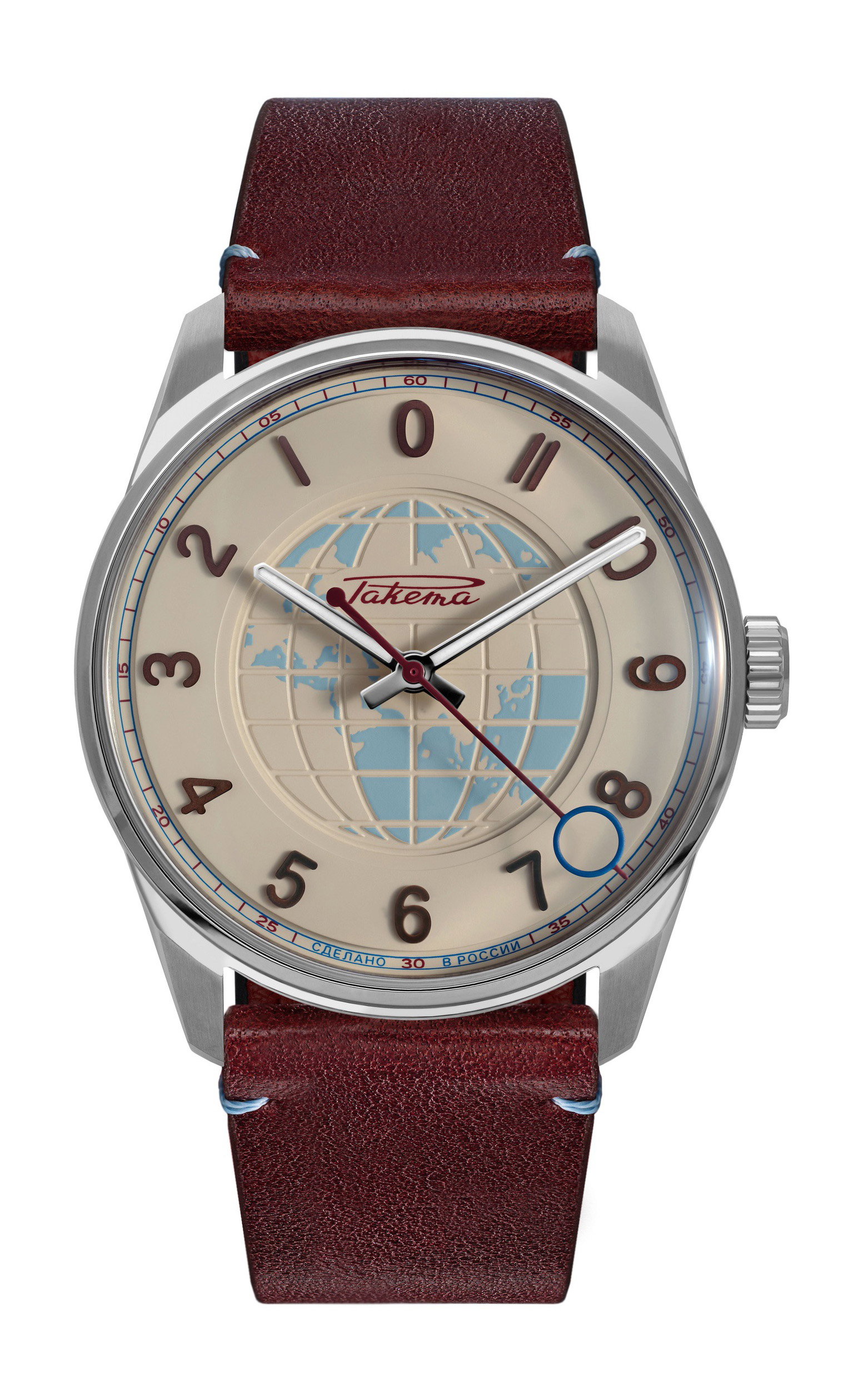
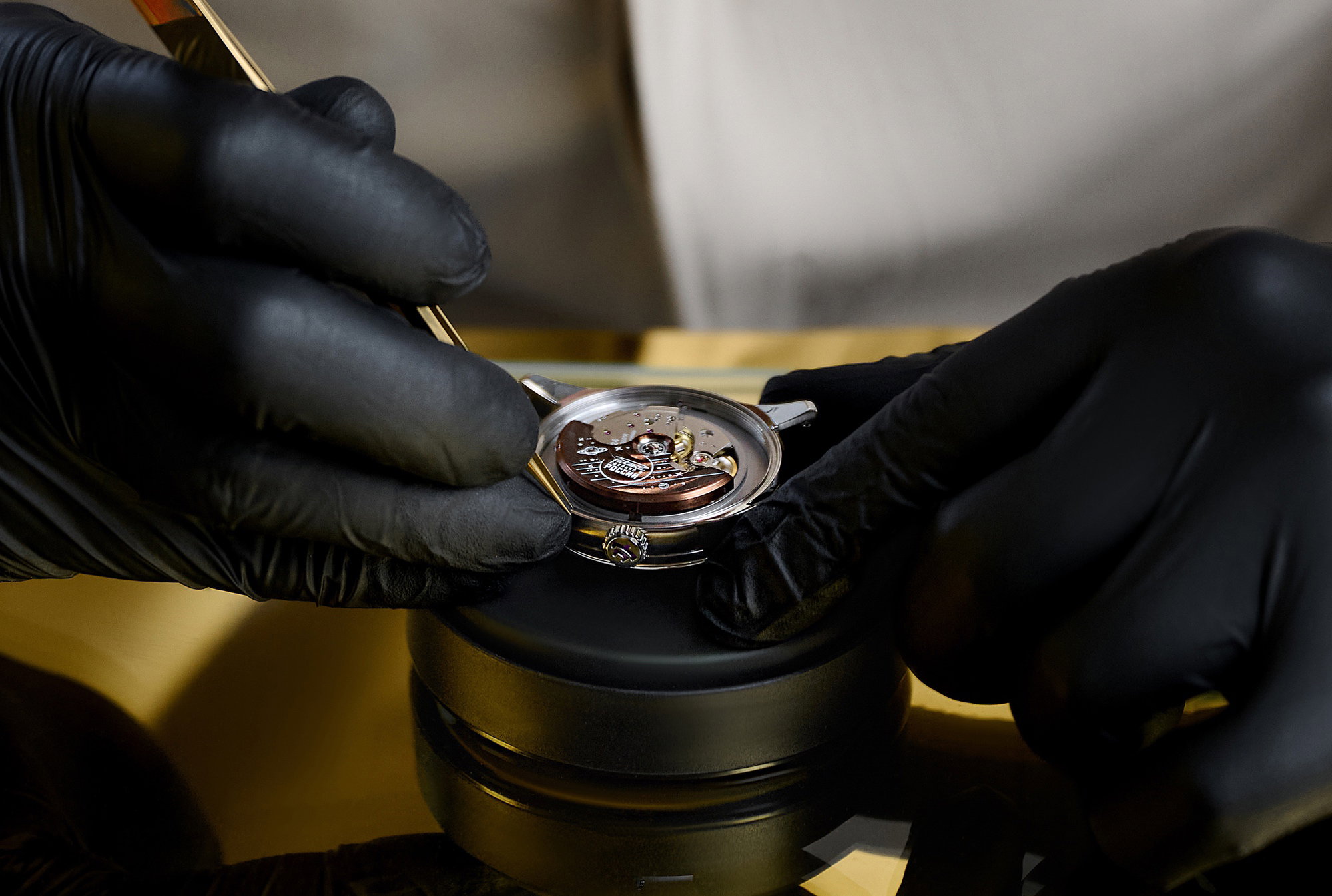
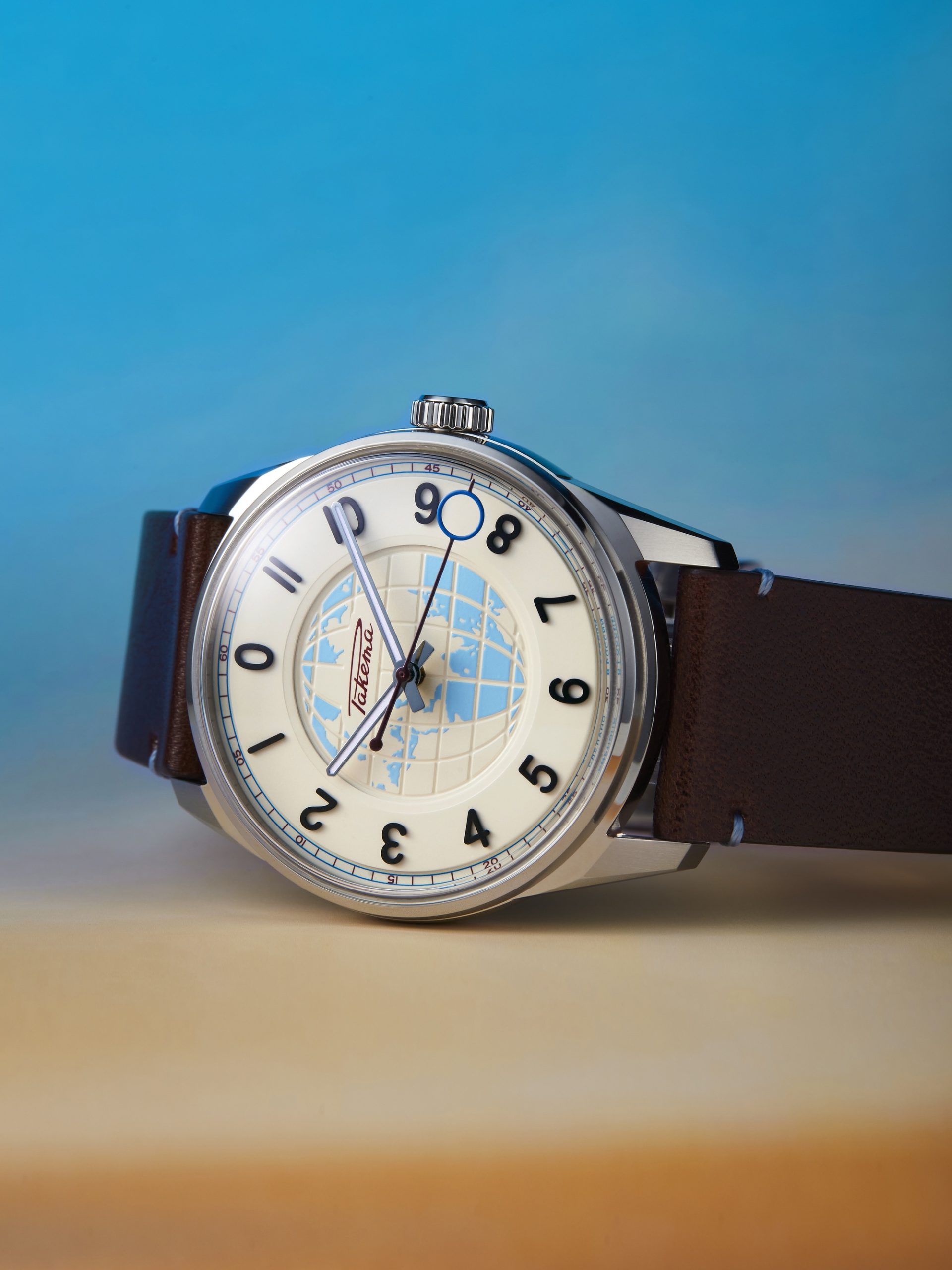
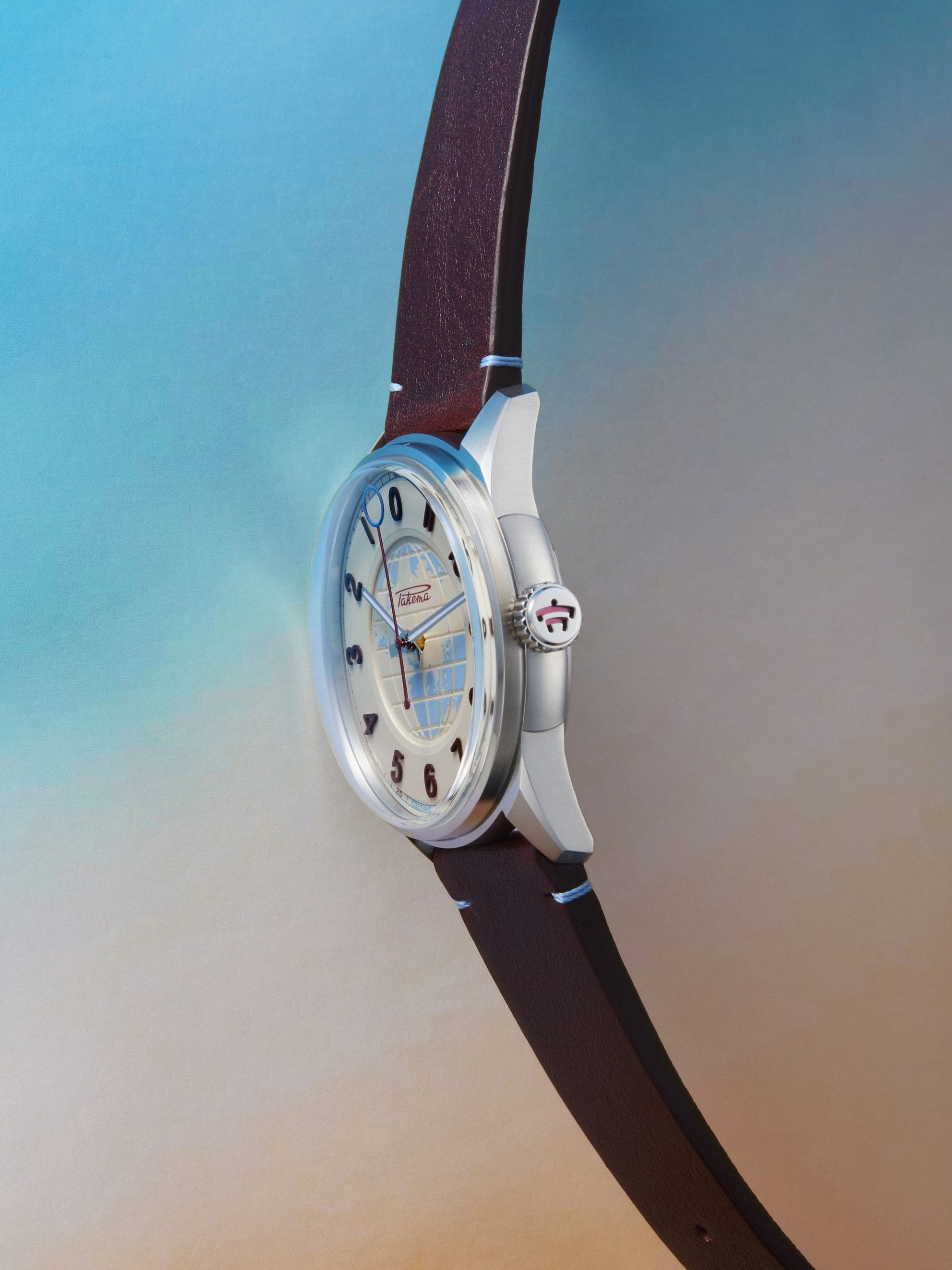
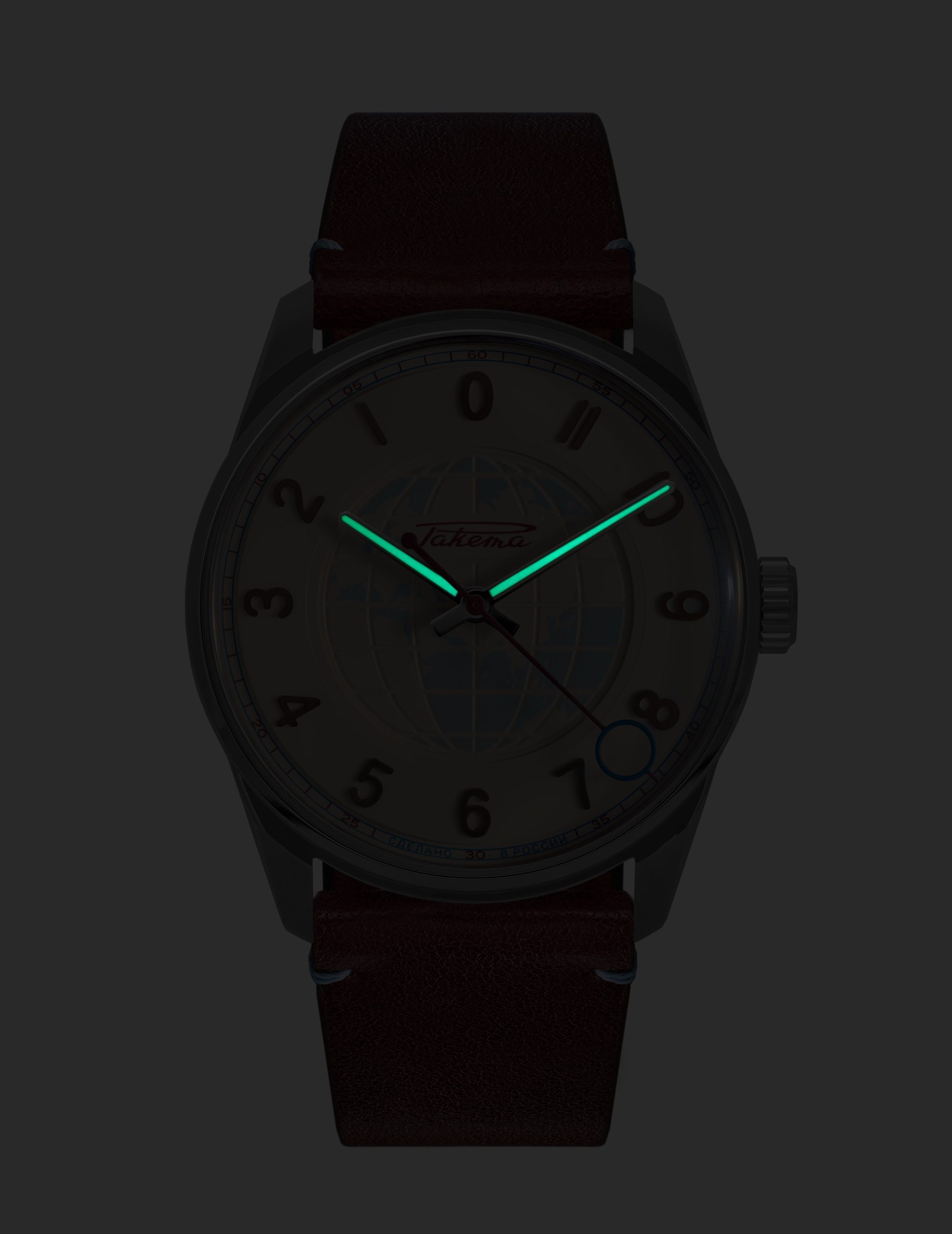
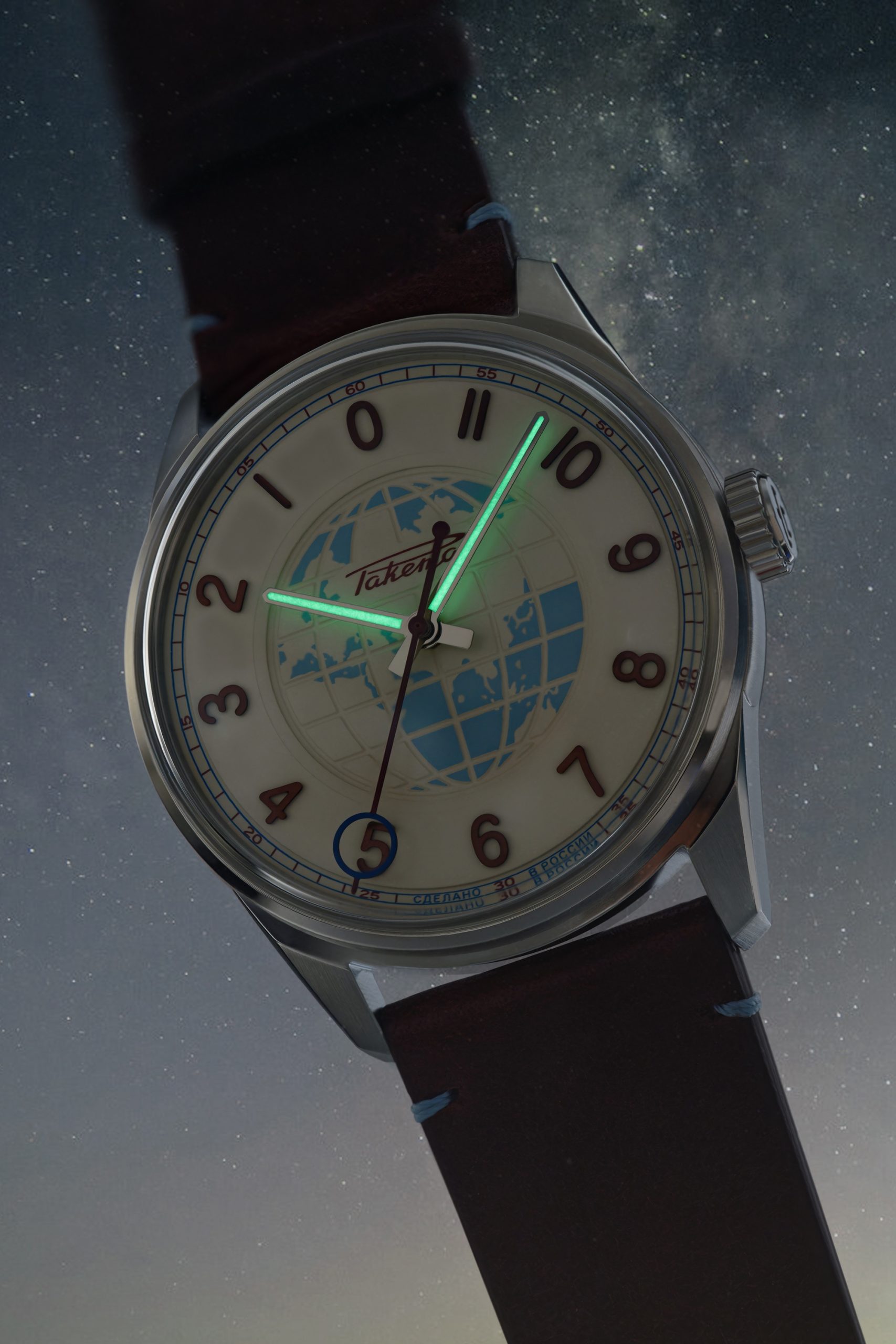
The watch itself is a stainless steel case with polished and satin surfaces, a curved sapphire crystal that produces a lens effect over the dial, and a light beige dial carrying convex hour markers and a relief rendering of the Earth divided by meridian lines. The Raketa logo sits directly above Russia on that map, which is either a design decision or a statement depending on how you read it. The brown leather strap picks up blue contrast stitching that echoes the ocean tones on the dial. Through the caseback, the self-winding movement is fully visible. Raketa’s engineers designed and built mirrored versions of the key components so the entire gear train moves in coordinated reverse.
The movement is made entirely at the Raketa Watch Factory in St. Petersburg. The rotor carries Neva wave engravings, a nanoceramic finish, and a printed decoration. The seconds hand is shaped as the Moon and orbits the dial-mounted Earth in the same counterclockwise direction as the solar system it represents. The brand has carried a space identity since 1961, when the Raketa name was chosen to honor Yuri Gagarin’s first flight. The Russian Code Meridian is where that history lands.


